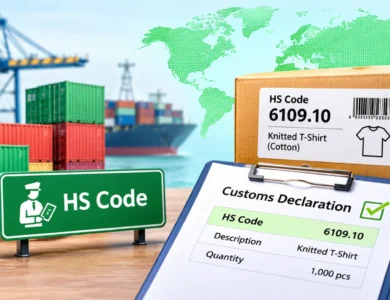
How to Find the Correct HS Code for a Product: Step-by-Step Guide
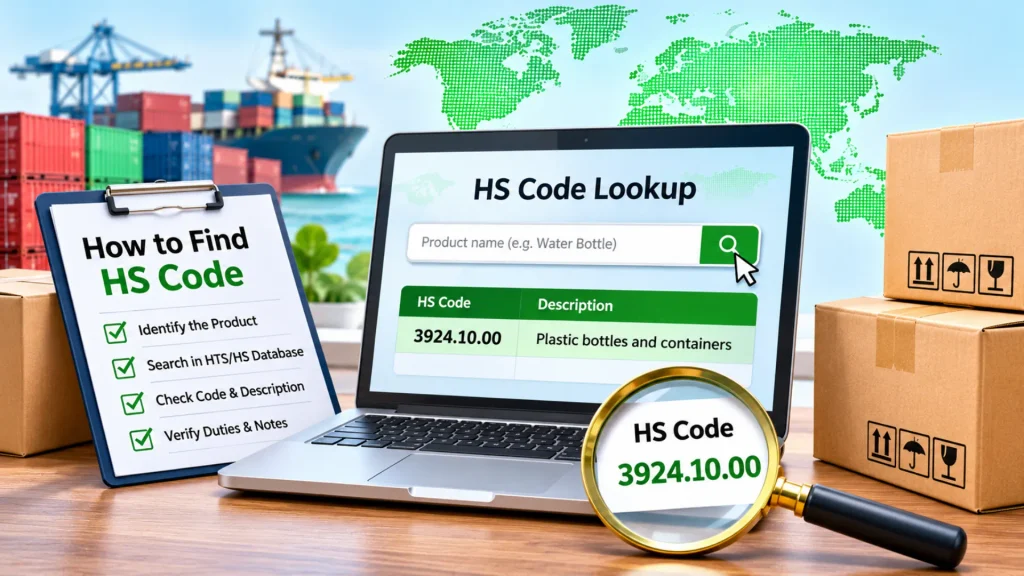
Imagine you’ve found a supplier overseas, negotiated a good price, and placed your first bulk order. The products are ready, the shipping arrangements are almost complete, and everything seems to be moving smoothly. Then your supplier or freight forwarder asks you to confirm the HS code before preparing the customs paperwork. You search the product name online, but instead of finding one clear answer, you discover several different codes that all seem relevant. Suddenly, a simple shipping requirement becomes one of the most confusing parts of the import process.
This situation is particularly common when importing products such as clothing, electronic accessories, kitchenware, or reusable containers. A product might be described one way on a supplier’s commercial invoice and another way in the official customs tariff schedule. For example, a supplier may call an item a “phone charger,” while the relevant tariff terminology describes certain products as static converters. Searching only for the everyday product name can make the correct classification surprisingly difficult to locate.
If you’re trying to understand how to find HS code information for a product, the most important thing to know is that customs classification is not simply about choosing a number that sounds right. The correct classification depends on what the product is made from, what it does, how it is constructed, and which legal tariff descriptions apply. A supplier’s suggested code, an online product listing, or a search engine result can provide useful clues, but none should be treated as automatic confirmation.
This guide explains how to research HS codes, use official tariff databases, compare possible classifications, and recognize situations where professional assistance may be necessary. The examples focus primarily on importing goods into the United States, although the underlying research approach can also help businesses working with other international markets.
What Is an HS Code and Why Do You Need One?
An HS code, or Harmonized System code, is an internationally standardized classification used to identify products moving through global trade. The Harmonized Commodity Description and Coding System is administered by the World Customs Organization (WCO), providing a common structure that customs authorities use to classify different types of merchandise. Instead of relying entirely on commercial product names, countries organize goods into chapters, headings, and subheadings according to established classification rules.
The international Harmonized System uses a six-digit classification, but individual countries may extend those six digits to create more detailed national tariff numbers. In the United States, the Harmonized Tariff Schedule of the United States (HTSUS) uses eight-digit legal tariff provisions and ten-digit statistical reporting numbers for imported merchandise. Other countries, including the United Kingdom and members of the European Union, have their own extended commodity classification systems.
Finding the correct classification matters because the tariff number helps identify which customs duty provisions and trade measures may apply to imported goods. It also supports customs declarations, international trade statistics, and the administration of certain product-specific requirements. However, an HS code does not independently determine every import obligation or the total amount of duty payable. Country of origin, customs value, applicable trade measures, and regulatory requirements may also affect the shipment.
For a small business importing merchandise for resale, classification research should ideally happen before placing a large order. Waiting until the goods are already on their way can create unnecessary pressure, especially if several possible classifications have different duty implications. Taking time to research the product early makes it easier to estimate costs, communicate with suppliers, and prepare accurate information for the customs broker.
Understand the Difference Between HS Codes and HTS Codes
Before searching for a product classification, it helps to understand why different websites may show different numbers for the same type of merchandise. The six-digit international HS code provides the common foundation, while countries add further digits for their domestic tariff schedules and statistical reporting systems. Those national extensions are not necessarily identical, even when the underlying product belongs to the same international HS category.
For example, a US importer may need a complete ten-digit HTSUS reporting number, while a supplier in another country uses a different extended code for its export documentation. The international six-digit classification may provide a useful point of comparison, assuming both countries are using corresponding HS provisions. However, copying the supplier’s entire national code into US entry documents can lead to errors if the additional digits refer to subdivisions that are not used in the United States.
| Classification system | Code length | Common use |
|---|---|---|
| International Harmonized System | 6 digits | International product classification |
| US HTS legal tariff provision | 8 digits | US import tariff classification |
| US HTS statistical reporting number | 10 digits | US import entry reporting |
| US Schedule B | 10 digits | US export reporting |
| EU Combined Nomenclature | 8 digits | EU customs tariff and trade statistics |
Another distinction is particularly relevant for American businesses: US import classifications and US export classifications use different national systems. Imports are classified using the HTSUS, while exports generally use Schedule B numbers administered by the US Census Bureau. Both systems share the international Harmonized System foundation, but their additional digits can differ. This means a company importing products into the United States and later exporting them may need to research both classifications.
How to Find the Correct HS Code for a Product
The most reliable approach combines accurate product information, official tariff research, and careful review of the classification rules. You do not need to memorize the entire Harmonized System, but you should understand how to narrow the search and evaluate the results. The following steps describe a practical method for researching a US import classification while avoiding some of the mistakes commonly made by first-time importers.
Step 1: Identify the Product’s Exact Characteristics
The first step is to collect enough information to describe the product accurately. Many classification errors begin with incomplete descriptions, especially when buyers rely on the short product names used in online marketplaces. A name such as “travel bottle,” “phone accessory,” or “storage container” may describe hundreds of products with different materials, functions, and technical characteristics. Customs classification often requires more detail than a typical customer-facing product listing provides.
Start by collecting the product’s material composition, primary function, technical specifications, construction details, and intended use. If the item contains several components, identify what those components are and how they work together. For clothing, fabric composition and construction may be important, while electrical products may require information about their operating functions and technical characteristics. Product photographs, specification sheets, samples, and manufacturer documentation can all help establish the relevant facts.
Consider a reusable drinking bottle purchased from an overseas manufacturer. The supplier’s listing might simply call it a “premium water bottle,” but that description does not establish whether it is plastic, glass, aluminum, or stainless steel. It also fails to explain whether the bottle is vacuum insulated, intended for hot beverages, or designed for another specific use. Those details may affect which tariff provisions should be investigated.
A useful habit is to prepare a product classification worksheet before opening a tariff database. Record the product’s commercial name alongside its technical description, materials, function, and any characteristics that could distinguish it from similar goods. This gives you a consistent reference when comparing tariff provisions and discussing the item with a supplier or customs professional. It also helps prevent the same classification questions from having to be researched again for every shipment.
Step 2: Open the Official US Harmonized Tariff Schedule
If you’re importing into the United States, begin with the official US Harmonized Tariff Schedule, published by the US International Trade Commission (USITC). This resource provides the tariff categories, descriptions, statistical reporting numbers, and duty provisions used in the US import classification system. It is more authoritative for US tariff research than an unidentified online directory or a product listing that merely suggests a code.
The HTS search tool allows users to look for terms associated with imported goods, but it is important to understand what the tool actually searches. The tariff schedule is a legal classification framework, not a complete catalog of every consumer product sold internationally. Some goods appear under familiar names, while others are described using broader technical or legal terminology. For that reason, a product search may return several possibilities or no obvious result at all.
For example, USITC guidance explains that searching for a common item such as a “phone charger” may not produce the expected results because certain products are described under tariff terminology relating to static converters. This demonstrates why relying entirely on everyday product names can be misleading. When your first search is unsuccessful, try the product’s technical function, material, or a broader category rather than assuming the item is missing from the tariff schedule.
It is also worth checking the date of the tariff schedule you are using. The HTS is updated periodically, and changes may affect classifications, statistical reporting provisions, or applicable trade measures. An old screenshot, previously saved spreadsheet, or outdated article may not reflect the version relevant to your shipment. Using the official current schedule helps reduce the risk of relying on superseded information.
Step 3: Search Using the Product’s Function and Materials
Once the official tariff search is open, avoid entering only the complete commercial product name. A longer marketing title might include brand names, promotional terms, and features that are irrelevant to customs classification. Instead, begin with straightforward descriptions of the product’s primary function and construction. If the first search returns unclear results, try alternative terms that describe the merchandise in a more technical way.
Suppose you’re importing a compact electronic device marketed as a “fast charging travel adapter.” Searching that exact phrase may produce different results from searching for a power supply or static converter. However, those search terms should only help you locate provisions to investigate; they do not establish the device’s legal classification. The actual electrical function, construction, and applicable tariff descriptions must still be reviewed.
The same approach applies to clothing and household products. Instead of searching only for “premium summer shirt,” identify whether the article is knitted or woven and what materials it contains. For a storage product, establish whether it is made from plastic, metal, textile material, or another substance, and determine its actual function. The goal is to move from a commercial description toward the objective characteristics used by customs authorities.
A useful research technique is to compare several plausible headings before selecting a classification. If multiple headings appear relevant, make a note of each one and identify what information would distinguish them. This prevents a common mistake: choosing the first search result simply because the wording resembles the product name. Tariff search results do not necessarily appear in order of legal suitability.
Step 4: Understand the HS Code Structure
Understanding the numerical structure makes the search process easier because it shows how broad product categories are divided into more specific classifications. Under the international Harmonized System, the first two digits identify a chapter, the first four identify a heading, and all six identify a subheading. In the United States, additional digits create national tariff and statistical reporting subdivisions.
Consider the example of fresh watermelons under HS subheading 0807.11. Chapter 08 covers edible fruit and nuts, among other related products, while heading 0807 covers fresh melons and papayas. The six-digit subheading 0807.11 identifies fresh watermelons within that broader heading. This example shows how the classification becomes more specific as the number progresses.
| Code level | Example | Explanation |
|---|---|---|
| Chapter | 08 | Broad group covering edible fruit and nuts |
| Heading | 0807 | Fresh melons and papayas |
| HS subheading | 0807.11 | Fresh watermelons |
| National subdivisions | Additional digits | Country-specific tariff or reporting detail |
Although the structure is hierarchical, classification should not be performed by choosing a chapter and then independently selecting whichever subheading seems most convenient. The legal rules govern the selection of headings and subordinate provisions. A product’s correct classification may depend on details that are not obvious from its commercial description. Understanding the numerical framework is therefore helpful, but it must be combined with a review of the relevant tariff text.
Step 5: Read the Section Notes, Chapter Notes, and Classification Rules
This is one of the most important stages of researching an HS code. The Harmonized System is supported by legal notes and General Rules for the Interpretation of the Harmonized System, commonly known as the GRIs. These rules determine how goods are classified when several provisions appear relevant or when the product has particular characteristics. They are essential because classification is a legal determination rather than a simple keyword-matching exercise.
For example, a product containing more than one material may require consideration of rules that address composite goods or potentially competing provisions. A set of articles sold together may raise different questions from the individual articles sold separately. In other cases, section or chapter notes may specifically include or exclude certain types of merchandise. These details can change the classification even when a search result initially appears suitable.
You do not need to become a customs lawyer to begin understanding the process, but you should avoid skipping legal notes entirely. When reviewing a possible heading, read its description and the relevant notes before proceeding to the more detailed subheadings. If a heading appears relevant but a legal note excludes the product, that provision may not be appropriate. If two classifications still seem possible, the issue may require a deeper application of the interpretation rules.
For new importers, this is often the point where professional help becomes valuable. A licensed customs broker or experienced classification specialist can assist in evaluating the relevant provisions and identifying missing product information. The responsibility for accurate entry information remains important even when a professional assists with the declaration, so importers should understand the basis for the classifications they use.
Step 6: Search CBP’s Customs Rulings Database
When an HS classification is unclear, the Customs Rulings Online Search System (CROSS) is another useful official resource. CROSS contains published rulings from US Customs and Border Protection (CBP) concerning particular products and customs questions. These rulings can help explain how CBP has interpreted tariff provisions and which product characteristics influenced a classification decision.
A practical way to use the database is to search for the product name, technical terminology, or a possible tariff number. If you find a ruling involving similar merchandise, carefully read its product description and reasoning. Determine whether the ruling involved the same materials, construction, intended function, and other relevant characteristics. A ruling about a superficially similar item may not apply when those characteristics differ.
Another important consideration is whether the ruling remains valid. CBP rulings can be modified or revoked, and CROSS provides information that may help identify relationships between rulings. Do not assume that an older ruling automatically reflects the currently applicable interpretation. Check the ruling’s status and compare any cited tariff provisions with the current official schedule.
Published rulings are valuable research resources, but they should not be mistaken for individual binding determinations issued to every importer of similar goods. If your product differs in significant ways, the analysis may lead to a different result. Where classification uncertainty remains important, requesting a ruling specifically covering your merchandise may be appropriate.
Step 7: Verify the Complete HTS Code and Duty Provisions
After identifying a likely classification, return to the official HTS and verify the complete US tariff provision. Confirm the applicable eight-digit legal classification and the associated ten-digit statistical reporting number. You should also review the description, reporting units, applicable legal notes, and any related tariff provisions. The objective is to ensure that the number matches the product and the current national classification system.
At this stage, many importers also check the ordinary customs duty rate. However, a basic tariff rate should not automatically be treated as the total duty payable. Depending on the product and shipment circumstances, additional duties, trade remedies, or other measures may apply. The country of origin, applicable preferential treatment, and customs valuation rules may also affect the result.
The US tariff schedule includes different duty columns and provisions for particular situations. Importers may need to examine additional chapters or government notices to understand the full tariff treatment. If the shipment is subject to complicated trade measures, a customs broker can help assess the applicable requirements. An accurate HS classification is the starting point for duty research, not a guarantee of the final landed cost.
Step 8: Confirm the Classification Before Shipping
Once you have researched the classification, document the result and the reasoning that supports it. Record the product description, materials, technical specifications, possible headings considered, applicable legal notes, and any relevant rulings. If a supplier originally provided a different classification, ask for clarification rather than assuming either number is automatically correct. This creates a useful record for future shipments and makes communication with your customs broker easier.
For businesses importing the same products repeatedly, maintaining a product classification register can save time. Such a register may include the supplier, product model, technical description, US tariff number, classification date, and supporting references. It should be reviewed whenever the product changes or relevant tariff provisions are amended. A classification that was reasonable for one version of a product may need reassessment if the manufacturer changes its materials or design.
When the customs classification is uncertain and financially significant, consider obtaining a binding ruling from CBP before relying on a particular tariff provision. This provides a formal interpretation for the merchandise and circumstances described in the ruling, subject to its terms and applicable legal requirements. Seeking certainty early can be especially important when a business plans to import the same merchandise in large quantities over an extended period.
Practical Example: Finding an HS Code for a Phone Charger
Imagine a US electronics retailer ordering several hundred charging adapters from an overseas manufacturer. The supplier describes the products as “USB Fast Chargers” and provides a national export code on the commercial invoice. The buyer searches for “phone charger” in the US Harmonized Tariff Schedule but cannot immediately find an exact match. At first, it may appear that the tariff database does not contain an appropriate classification.
The difficulty comes from the difference between everyday product terminology and the language used in tariff provisions. Certain charging devices are described in provisions related to static converters rather than under the common phrase “phone charger.” The USITC itself uses this type of example to explain why search results may be incomplete or unexpected. Identifying the relevant technical function is therefore an important part of classification research.
The retailer should begin by collecting the charger’s specifications, including how it converts electrical power, its inputs and outputs, and whether the device includes other functions. The next step would be to research possible headings and subheadings in the current HTS, review the relevant legal notes, and search CROSS for comparable products. The supplier’s suggested classification may be considered as a reference, but it should not replace verification under the US tariff system.
This example demonstrates a useful lesson: when a product name does not appear in the tariff schedule, changing the search terminology is often more productive than repeatedly searching the same phrase. The correct classification depends on the actual merchandise and the legal tariff descriptions, not simply the language used in an online store.
Practical Example: Finding an HS Code for Clothing
Clothing is another category where product descriptions can be misleading. Imagine an online fashion retailer importing shirts from several manufacturers. One supplier describes its merchandise as casual cotton T-shirts, another lists similar items as knitted tops, and a third supplies woven shirts. These products may appear similar in photographs, but the way the garments are constructed can be important for customs classification.
The retailer should first identify the fabric composition, garment construction, intended wearer, and relevant design characteristics. A knitted or crocheted garment may be considered under different tariff headings from a woven garment. Additional distinctions can also apply within a heading based on the product’s characteristics. Selecting a code merely because the description contains the word “shirt” would therefore be unreliable.
A sensible approach is to examine the relevant apparel chapters and compare possible provisions against the manufacturer’s specifications. Where the distinction is unclear, the importer may review CBP rulings or consult a qualified classification specialist. Keeping detailed product records is particularly helpful for clothing businesses because similar-looking styles can differ in legally significant ways.
How to Find HS Codes for Products Imported From China
Businesses importing from China often receive HS codes directly from manufacturers or sourcing agents. These numbers can be useful when discussing a product with suppliers, but the extended Chinese commodity classification should not automatically be used for US customs entry. The two countries share the international Harmonized System foundation, subject to the applicable edition and classification rules, but their national subdivisions may differ.
For example, an overseas supplier may provide a ten-digit commodity number used for its local export declaration. A US importer should identify the product’s international classification and separately verify the relevant US HTSUS provision. This requires reviewing the actual merchandise rather than assuming that every digit in the supplier’s code can be transferred unchanged. Where the supplier’s suggested classification differs from the US research, the discrepancy should be investigated.
Importers should also remember that classification and country of origin are separate customs considerations. The tariff number identifies the kind of merchandise, while origin rules help determine the country associated with the goods for relevant customs purposes. Goods shipped from China are not automatically considered Chinese-origin merely because they were dispatched from a Chinese warehouse. The circumstances of production and applicable origin rules must be considered separately.
What If You Cannot Find the Correct HS Code?
Sometimes a careful search still leaves several possible classifications. This can happen when a product has multiple functions, contains several materials, or uses technology that is not described by a familiar commercial name in the tariff schedule. The absence of a straightforward search result does not mean the product has no classification. It means that additional analysis is needed to identify the appropriate provision.
When this happens, return to the product’s technical description and confirm that all important characteristics are known. Search using alternative terminology, review broader headings, and read the legal notes that govern the relevant categories. You can also examine published CBP rulings for comparable products and ask the supplier for detailed supporting documents. These steps often reveal information that was missing from the initial search.
The USITC offers informal technical assistance concerning the tariff schedule, while CBP provides procedures for requesting formal binding classification rulings. Informal assistance can help clarify how the tariff schedule is organized, but it should not be confused with a legally binding decision. Where a product presents a significant classification question, formal guidance may be preferable to guessing.
When Should You Request a Binding HS Code Ruling?
A binding classification ruling can be useful when the correct tariff classification is uncertain and the decision could materially affect import costs or compliance. This may arise with specialized industrial equipment, multifunction electronics, complex textile products, chemical merchandise, or products that combine several materials. Businesses planning repeated imports may also benefit from resolving difficult classification questions before committing to large shipments.
In the United States, CBP administers a binding ruling program that allows eligible parties to request decisions on prospective import transactions. The request generally needs sufficient information for CBP to understand the merchandise and the question being presented. Depending on the product, technical descriptions, diagrams, photographs, samples, or other supporting materials may be relevant.
Importers should review CBP’s current procedures before submitting a request, including any applicable restrictions and required information. A ruling is based on the merchandise and facts described, so a meaningful product change may require reassessment. A binding classification ruling should also not be interpreted as a permanent guarantee of a particular duty rate, since applicable tariff rates and other trade measures can change.
Free Tools and Official Websites for HS Code Lookup
Several official resources can help businesses research commodity classifications without purchasing a commercial classification subscription. For US importers, the most important starting point is the USITC’s online tariff schedule. CBP’s ruling database is also valuable because it provides examples of classifications and explanations of the reasoning behind them. For US exports, the Census Bureau’s Schedule B resources provide a separate classification system.
| Tool or resource | What it helps with | Official website |
|---|---|---|
| US Harmonized Tariff Schedule | US import classification and tariff research | hts.usitc.gov |
| CBP CROSS | Published customs classification rulings | rulings.cbp.gov |
| CBP eRulings | Requests for binding classification rulings | erulings.cbp.gov |
| US Census Schedule B | US export commodity classification | census.gov |
| World Customs Organization | International HS framework and terminology | wcoomd.org |
Commercial HS code lookup platforms may offer additional features, including product keyword searches, comparisons between national tariff systems, and saved classification records. These tools can be convenient for businesses researching large numbers of products, but their results should still be evaluated against official legal provisions. A suggested number is not necessarily correct simply because several websites display it.
For beginners, the best starting approach is usually to learn how to use the official tariff schedule rather than immediately depending on automated recommendations. Once you understand the structure and classification principles, third-party tools can become more useful for organizing research and identifying potential provisions.
Common Mistakes When Finding an HS Code
Even experienced businesses can encounter classification problems when product information is incomplete or tariff requirements change. Some of the most common mistakes are surprisingly easy to make because they involve shortcuts that initially seem reasonable. Recognizing these problems can help importers approach classification research more carefully.
Copying the First HS Code Found on Google
A quick web search may display several product codes, but search engine results do not establish which legal provision applies to your merchandise. The displayed number might come from another country’s tariff schedule, an outdated article, or a product with different technical characteristics. Without checking the original source and applicable legal text, it can be difficult to know whether the result is reliable.
Use general search results to discover possible terminology or identify relevant official resources. Then confirm the potential classification against the current national tariff schedule and appropriate legal notes. This is more dependable than choosing a number based on how frequently it appears online.
Assuming Similar Products Have Identical Codes
Two products can have similar names and appearances while belonging to different tariff provisions. Differences in material composition, manufacturing methods, primary function, or technical characteristics may change the classification. For example, clothing construction and fiber content can matter, while electronic devices may need to be distinguished according to their actual functions.
When comparing your product with another item, focus on the characteristics relevant to the tariff descriptions. Similar branding or intended customers do not necessarily establish that the goods are classified together. Accurate technical information is generally more useful than a marketing comparison.
Using an Export Code for an Import Declaration
A supplier may provide a commodity number used for exporting goods from its own country. Although the international six-digit framework provides a shared foundation, national tariff subdivisions can differ. This is also relevant in the United States, where HTSUS classifications for imports and Schedule B classifications for exports are separate systems.
Before preparing customs documentation, verify which national classification system is required. For US imports, research the HTSUS number rather than automatically using a foreign export code or a US Schedule B number. Maintaining separate import and export classification fields in business records can help prevent confusion.
Ignoring Product Changes
A classification may need to be reviewed when a manufacturer changes the product’s construction, materials, or functions. For example, replacing one material with another or introducing a new technical feature may affect the legal analysis. Even if the commercial product name remains unchanged, the classification may not necessarily remain the same.
Businesses should therefore review tariff classifications when product specifications change. Maintaining updated supplier documentation and linking classification records to the relevant product models can make these reviews easier. This is particularly useful for retailers sourcing similar merchandise from multiple manufacturers.
Forgetting Additional Tariff Measures
Identifying a tariff number does not always complete the duty calculation. Additional measures may apply depending on the product, country of origin, and applicable regulations. A business that considers only the ordinary duty rate may underestimate its import costs or overlook other requirements.
Once classification research is complete, review the relevant duty provisions and current government notices. If the shipment involves complicated tariffs or trade restrictions, seek qualified advice before calculating the final landed cost. The goal is to understand the full customs treatment rather than treating the HS code as an all-inclusive answer.
What Happens If You Use the Wrong HS Code?
Using an incorrect HS code can create problems because customs authorities rely on classification information when reviewing imported merchandise and determining applicable tariff provisions. If the classification results in an incorrect declaration or duty calculation, the importer may need to provide additional documentation or correct the entry. Depending on the circumstances, the error can lead to delays, duty adjustments, or potential penalties under applicable customs laws.
Not every classification error has the same consequences, and the appropriate response depends on the jurisdiction, timing, and nature of the problem. An error discovered before entry processing may be handled differently from one identified after the goods have already been released. Importers should not assume that a mistake can always be resolved by simply changing the code on a commercial invoice.
If you discover a possible classification error, gather the relevant product records, tariff references, and entry documentation. Contact your customs broker or an appropriately qualified professional to determine the available correction procedures. Acting promptly and maintaining accurate records can help you address the problem more responsibly than ignoring it.
How to Make HS Code Research Easier for Future Shipments
Businesses that import products regularly can save time by creating a simple classification database. Instead of researching the same product repeatedly, maintain a record of the technical specifications, classification numbers, supporting references, and dates when the information was last reviewed. This can be managed in Microsoft Excel, Google Sheets, or an inventory management system that supports customs-related product fields.
A useful record might include the product SKU, supplier name, product description, materials, intended function, country-specific commodity code, and supporting classification documents. You can also include the name of the person who reviewed the classification and notes about any uncertainty that remains. If a customs broker provided assistance or CBP issued a relevant ruling, record that reference as well.
The classification record should not become a substitute for checking current tariff requirements. National tariff schedules can change, products can be redesigned, and additional trade measures can affect imports. Review important classifications periodically and whenever relevant product or regulatory information changes. A well-maintained record helps create consistency while still allowing necessary updates.
Final Thoughts
Finding the correct HS code becomes much easier when you approach classification as a structured research process rather than a quick online search. The most important starting point is a detailed understanding of the product, including its materials, construction, and primary function. Once those details are clear, official tariff databases provide a framework for locating possible headings and subheadings. Reviewing the legal notes and interpretation rules helps distinguish a suitable classification from a number that merely sounds similar to the product’s name.
For businesses importing goods into the United States, the USITC Harmonized Tariff Schedule and CBP’s published rulings are particularly useful resources. They can help identify potential classifications and explain why certain products fall under specific tariff provisions. However, official search results and third-party suggestions should not be treated as guaranteed determinations for individual merchandise. If an important classification question remains unresolved, consulting a qualified customs professional or requesting a binding ruling can provide greater confidence.
The practical lesson is to research classification before shipping rather than waiting for a customs broker or freight forwarder to request a number at the last minute. Keep accurate product specifications, document how you reached the classification, and review the result when products or tariff provisions change. These habits can improve the accuracy of customs documentation and make repeated import transactions easier to manage. A correct classification is only one part of import compliance, but it is an important foundation for understanding the duties and requirements associated with your goods.
Frequently Asked Questions About Finding HS Codes
How do I find the HS code for my product?
Start by collecting accurate information about the product’s materials, construction, technical specifications, and primary function. Then search the official tariff schedule for the country where the goods will be imported. Review the possible headings, legal notes, and applicable classification rules before selecting a provision. For US imports, the USITC’s online HTS and CBP’s CROSS database are useful official resources.
Can I find an HS code using a product name?
A product name can be a useful starting point, but it may not be enough to determine the correct classification. Customs tariff schedules sometimes describe products using technical terminology or broader legal categories rather than common retail names. If an initial search produces no useful results, try searching by material, function, or another relevant product characteristic. Always verify the result against the applicable tariff descriptions and classification rules.
Is there a free HS code lookup tool?
Yes. The USITC provides free online access to the Harmonized Tariff Schedule for US import research, and CBP maintains a searchable database of published customs rulings. The US Census Bureau also provides Schedule B resources for export classifications. These official tools are useful starting points, although complex products may still require professional classification assistance or a binding ruling.
Can I use the HS code from my supplier?
A supplier’s classification can help narrow your research, but you should verify it before using it for the destination country’s customs declaration. National tariff subdivisions may differ between countries, and the supplier may not have considered every characteristic relevant to your product. For US imports, confirm the appropriate HTSUS reporting number rather than automatically copying the supplier’s complete foreign tariff code.
What is the difference between an HS code and a Schedule B number?
An international HS code contains six digits and provides a shared commodity classification framework. Schedule B is a US export classification system administered by the Census Bureau and generally uses ten-digit reporting numbers. The US HTSUS also contains ten-digit numbers, but those are used for import reporting and may differ from Schedule B classifications beyond the shared international foundation. Businesses importing and exporting the same goods may therefore need both codes.
How do I know whether an HS code is correct?
A proposed HS classification should be supported by the product’s actual characteristics, the relevant tariff provisions, and the applicable legal interpretation rules. Published customs rulings may help explain how similar products have been classified, but the details must be comparable and the ruling must remain relevant. For US imports, CBP can provide binding classification rulings through its formal ruling procedures. Where significant uncertainty remains, qualified professional advice is preferable to guessing.
Can the HS code for a product change?
Yes. Classification requirements may change when tariff schedules are amended, relevant legal interpretations change, or the product itself is modified. A manufacturer might alter a product’s material composition or function while continuing to sell it under the same commercial name. Businesses should review classifications when these changes occur and periodically confirm that their tariff records remain current.
Do I need a different HS code for every country?
The six-digit Harmonized System framework is internationally standardized among countries using corresponding versions of the system, but national tariff subdivisions may differ. A product can therefore have different complete commodity numbers in different countries even when the underlying six-digit classification corresponds. When preparing customs documents, use the classification system required by the relevant country and verify its current provisions.