
Import vs Export: Key Differences, Process and Real-World Examples
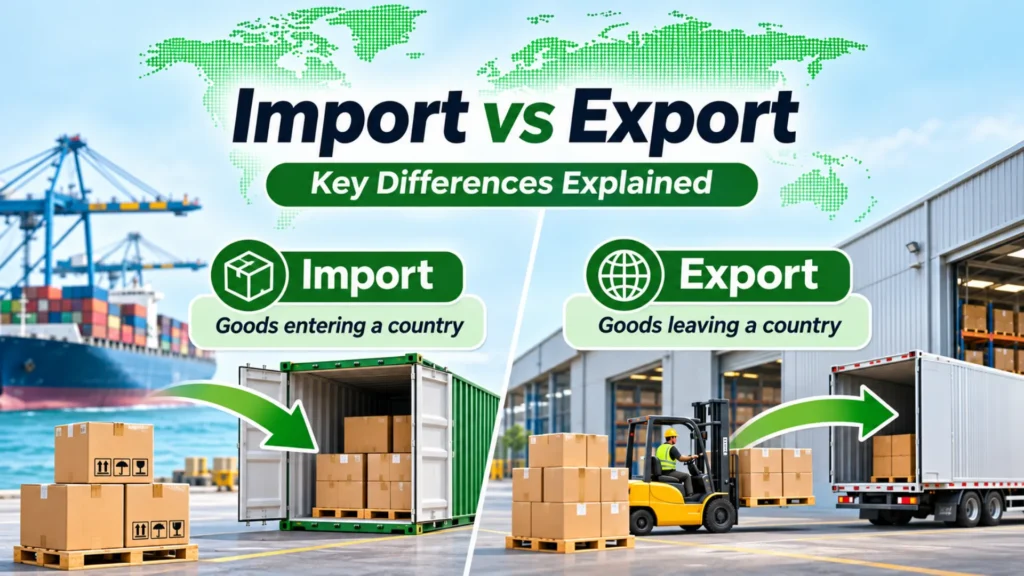
Imagine running a small online store in the United States that sells kitchen accessories. You find a manufacturer in China offering reusable food containers at a price that makes sense for your business. After ordering 1,000 units, you arrange shipping to your warehouse in California. From your perspective, you are importing products into the United States, but the manufacturer is exporting those same products from China. The shipment is exactly the same, yet the business activity has a different name depending on which side of the international transaction you are on.
Now imagine your store starts receiving wholesale orders from customers in Canada. Instead of bringing merchandise into the United States, you begin sending products to buyers in another country. Your business is now involved in exporting, which introduces a different set of responsibilities, documents, and trade requirements. Understanding the difference between these activities is important because importing and exporting can involve different customs procedures, classification systems, costs, and regulatory obligations.
The import vs export distinction is relatively simple at first, but the practical differences become clearer when you look at how international shipments are handled. Importers need to understand how merchandise enters a country, while exporters need to prepare goods for departure and satisfy applicable export requirements. Both activities involve international trade, but the direction of the goods changes the role each business plays.
This guide explains importing and exporting in plain English, with practical examples focused primarily on businesses operating in the United States. You’ll learn how each process works, which documents are commonly required, how customs duties and product classifications differ, and what to check before starting an international trading business.
What Is Import vs Export?
Importing means bringing goods into a country from another country, while exporting means sending goods from one country to another. The distinction is based on the direction in which merchandise moves relative to the country being discussed. When a US company purchases merchandise from an overseas manufacturer and brings those products into the United States, the goods are imports. When that same US company sends merchandise to a customer in another country, the goods are exports.
An important detail is that importing and exporting describe opposite sides of many international transactions. A shipment of furniture moving from Vietnam to the United States represents an export from Vietnam and an import into the United States. The physical merchandise does not change because one country calls it an export and the other calls it an import. The terminology simply describes the shipment from each country’s perspective.
The US Census Bureau maintains official definitions for merchandise imports and exports used in American trade statistics. These definitions can include additional distinctions, such as goods returned to the United States or foreign-origin goods re-exported without substantial processing. For beginners, however, the most useful starting point is to understand which country is receiving the goods and which country is sending them.
What Is an Import?
An import is a product or merchandise shipment brought into a country from another country. Businesses import goods for many reasons, including resale, manufacturing, distribution, or use in their own operations. Imported merchandise can include raw materials, components, machinery, consumer products, and finished goods. In the United States, imports are subject to applicable customs entry procedures and other legal requirements.
Consider a US clothing retailer that purchases 2,000 cotton shirts from a manufacturer in Bangladesh. The shirts are shipped to a US port, where the importer or its authorized representative prepares the customs entry and satisfies the applicable requirements. Once the necessary release conditions have been met, the goods can move into the retailer’s distribution network. From the United States’ perspective, this is an import transaction because merchandise has entered the country from abroad.
Businesses often import products because overseas suppliers can provide specialized manufacturing capabilities, raw materials, or products not readily available from domestic sources. However, the supplier’s selling price is not necessarily the final cost of acquiring the goods. International freight, insurance, customs duties, taxes, regulatory compliance, and delivery charges may also affect the total cost. Importers need to consider these expenses before deciding whether a supplier’s quotation represents a good commercial opportunity.
Common Examples of Imports
Imports are involved in many products that people and businesses use every day. A US electronics retailer might purchase finished devices from an overseas manufacturer, while a furniture company might source wooden components for domestic assembly. A restaurant may import specialized kitchen equipment, and an industrial manufacturer may bring in machinery or replacement parts from another country. The common factor is that the merchandise is entering the domestic market or another applicable customs procedure from abroad.
Not every import is intended for immediate resale. Some imported materials are used to manufacture other products, while certain goods may enter a bonded warehouse or foreign-trade zone under specialized procedures. The customs treatment depends on the facts and the applicable regulations. This is why the term “import” describes a broad commercial activity rather than a single shipping method or document type.
What Is an Export?
An export is merchandise sent from one country to a destination in another country. Businesses export products when they sell goods to international buyers, supply overseas distributors, or move merchandise abroad for other permitted commercial purposes. Exports can include finished products, industrial components, agricultural commodities, and many other types of goods. The applicable requirements depend on the origin country, destination, product, and parties involved.
For example, imagine a manufacturer in Ohio producing industrial measuring instruments. A distributor in Germany places an order for several units, and the US manufacturer arranges shipment to the German customer. From the US perspective, the instruments are exports because they are leaving the United States. When the goods arrive in Germany, they become imports from the perspective of the destination country.
Exporting can create opportunities for businesses to reach customers beyond their domestic market, but it also requires careful planning. An exporter may need to check destination-country import requirements, determine whether export controls apply, prepare accurate shipping documents, and arrange international transportation. The US government does not generally impose customs tariffs on goods simply because they are exported, but that does not mean every export is free from filing requirements, restrictions, or other expenses.
Common Examples of Exports
A US agricultural company shipping soybeans to an overseas customer is conducting an export transaction. The same applies when a manufacturer sends machine parts to a foreign factory or a small business sells physical products to an international wholesaler. Even a relatively small shipment can be an export when merchandise crosses a national border, although the specific filing requirements may differ from those for larger commercial transactions.
Exports are not limited to merchandise manufactured entirely in the exporting country. In US trade statistics, goods of foreign origin that are shipped abroad without substantial processing may be classified as foreign exports or re-exports. These distinctions matter for accurate reporting, but they do not change the basic concept that exporting involves sending merchandise to another country.
Import vs Export: Key Differences Explained
The biggest difference between importing and exporting is the direction of the goods, but the practical responsibilities also change. An importer is primarily concerned with bringing merchandise into a country under the applicable entry rules, while an exporter is concerned with sending merchandise abroad in compliance with export requirements. The parties may also be responsible for different documents, classifications, regulatory checks, and financial obligations.
The following table compares the two activities from the perspective of a business operating in the United States.
| Feature | Import | Export |
|---|---|---|
| Meaning | Bringing goods into a country | Sending goods to another country |
| Direction | Inbound international movement | Outbound international movement |
| US example | Buying products from China for delivery to the USA | Selling US products to a customer in Canada |
| Main US customs authority | US Customs and Border Protection | Export requirements involve multiple agencies, including Census, BIS, and CBP |
| Commodity classification | Harmonized Tariff Schedule (HTSUS) | Schedule B, or HTS where permitted for export reporting |
| Customs duties | May apply when goods enter the USA | US export tariffs generally do not apply |
| Main regulatory concern | Import admissibility, entry requirements, duties, and product compliance | Export controls, destination restrictions, reporting, and transport requirements |
| Common documents | Commercial invoice, packing list, transport documents, customs entry | Commercial invoice, packing list, transport documents, and applicable export filings |
| Business objective | Source goods from foreign markets | Supply goods to foreign markets |
These differences are useful when planning a shipment, but the exact allocation of costs and responsibilities depends on the commercial agreement and applicable laws. For example, a foreign seller may agree to arrange delivery to the buyer’s destination, but that agreement does not automatically resolve who is legally eligible to act as the importer of record. Businesses should distinguish contractual shipping responsibilities from obligations imposed by customs authorities.
Another important difference is that import and export requirements can apply at different points in the shipping process. Importers often focus on customs release and entry documentation at the destination, while exporters may need to complete classification, licensing checks, and electronic filing before the shipment leaves the origin country. Both sides benefit from preparing their information before the goods are collected by the carrier.
How Does the Import Process Work?
Importing products involves more than placing an overseas order and waiting for a delivery. The buyer should understand the merchandise, confirm whether it can be imported legally, estimate the total landed cost, and identify the required customs procedures. For US businesses, US Customs and Border Protection administers import entry requirements, while other government agencies may regulate particular categories of goods.
Step 1: Identify the Product and Check Import Requirements
Begin by gathering complete information about the merchandise, including its materials, technical specifications, primary function, country of origin, and intended use. These details help determine the product’s tariff classification and identify possible regulatory requirements. Certain products may require permits, additional declarations, or compliance with standards administered by agencies such as the Food and Drug Administration or other federal authorities.
For example, importing ordinary household merchandise may involve different requirements from importing food products or medical equipment. A supplier’s willingness to ship an item internationally does not establish that the merchandise can legally enter the United States. Researching the requirements before purchasing can help avoid expensive problems after the shipment arrives.
Step 2: Find the Correct HS or HTS Code
Commodity classification is a fundamental part of import planning. In the United States, the Harmonized Tariff Schedule provides the legal tariff structure for imported goods, while the international Harmonized System supplies the first six digits of the classification framework. The correct US classification may require additional digits and careful review of the relevant descriptions and legal notes.
Importers should not automatically rely on a supplier’s extended foreign tariff code. The supplier’s classification may be useful for research, but national subdivisions can differ between countries. Use the official US HTS and seek professional assistance where classification is uncertain, particularly when the decision could materially affect duty calculations.
Step 3: Calculate the Expected Landed Cost
A product’s purchase price is only one component of the total importing cost. International freight, insurance, customs duties, brokerage fees, applicable taxes, and domestic transportation may affect the final amount paid to bring the merchandise to its destination. These costs can vary depending on the shipment, transportation method, commercial terms, and applicable tariff measures.
For example, a supplier may quote a low unit price without including ocean freight, customs clearance, or delivery to the buyer’s warehouse. Comparing that quotation directly with a domestic supplier’s delivered price could create an unrealistic estimate of potential savings. A landed-cost calculation helps businesses evaluate the full transaction before placing a large order.
Step 4: Arrange Shipping and Prepare Documents
Once the purchase is confirmed, the buyer and seller need to establish how the goods will be transported and which party will arrange the relevant services. Common documents include a commercial invoice, packing list, and bill of lading or air waybill, depending on the mode of transportation. Other documents may be required because of the product, the shipping route, or the applicable customs procedure.
The parties should also agree on clear commercial delivery terms. Incoterms rules, published by the International Chamber of Commerce, can help identify responsibilities for transportation, costs, and the transfer of risk. However, they do not replace the sales contract or override customs laws.
Step 5: Complete Customs Entry and Obtain Release
When the merchandise reaches the United States, the importer of record or an authorized customs broker submits the relevant entry information. CBP reviews the shipment under applicable procedures and may request additional documentation or examination. The importer must also satisfy the applicable entry-summary and financial obligations, which are not always completed at the exact moment cargo release is authorized.
After CBP authorizes release and the remaining carrier or terminal conditions are satisfied, the goods can proceed to their final destination. A shipment may therefore be released by customs before its final delivery is arranged. Importers should keep records of the transaction and entry documents for future reference and compliance purposes.
How Does the Export Process Work?
Exporting requires a different approach because the merchandise is leaving the country rather than entering it. A business must confirm that the goods can be exported to the intended destination, determine whether licensing or reporting requirements apply, and arrange suitable shipping documents. For US exporters, the Department of Commerce, the US Census Bureau, and other relevant government agencies provide guidance on different aspects of the process.
Step 1: Confirm the Buyer and Destination
Before accepting an international order, an exporter should understand who is purchasing the goods, where the shipment will be delivered, and how the merchandise will be used. Certain transactions may be restricted because of sanctions, export controls, the identity of the parties, or the intended end use. These requirements can apply even when the product appears to be an ordinary commercial item.
Exporters should also investigate the destination country’s import requirements. A product may be lawful to export from the United States but still require special documentation or approval before entering the buyer’s country. Working through these questions early can help prevent delivery problems after the goods have been shipped.
Step 2: Determine the Correct Export Classification
For US merchandise exports, Schedule B is the principal classification system administered by the US Census Bureau. Schedule B numbers are based on the international Harmonized System and generally contain ten digits, but they are not always identical to the US HTSUS import classifications. The appropriate classification is necessary for accurate export reporting and related documentation.
US exporters should use official Census resources to determine the correct Schedule B number or identify when an HTS number is permitted for reporting purposes. A number used for a previous import transaction should not automatically be assumed suitable for an export declaration. Classification should be based on the actual merchandise and the applicable reporting requirements.
Step 3: Check Export Licensing Requirements
Not every US export requires an individual export license, but businesses must determine whether licensing or other export controls apply. Relevant factors can include the product’s technical capabilities, destination, recipient, and intended end use. Some goods may be subject to the Export Administration Regulations, while others may fall under different control systems.
The Bureau of Industry and Security (BIS) provides guidance on export controls for merchandise subject to its jurisdiction. Exporters should investigate the applicable rules rather than assuming that ordinary commercial products are always unrestricted. When a transaction involves sensitive technology, unfamiliar buyers, or restricted destinations, qualified professional guidance can be valuable.
Step 4: Prepare Export Documents and Filing Information
Common export documents may include a commercial invoice, packing list, transportation documents, and other records required by the destination country or the commercial transaction. Depending on the shipment, Electronic Export Information (EEI) may also need to be filed through the Automated Export System (AES). For many US exports, EEI filing is required when the value of goods classified under an individual Schedule B number exceeds $2,500, although other mandatory filing situations and exceptions exist.
The filing requirement is not simply determined by the total invoice value, and export licensing rules can independently trigger reporting obligations. Exporters should check the current Foreign Trade Regulations and confirm the appropriate filing or exemption citation. The relevant information generally needs to be provided before departure under the applicable filing deadlines.
Step 5: Ship the Goods and Complete the Transaction
After the necessary checks and documents are completed, the goods can be transferred to the agreed carrier for international transportation. The exporter should retain shipment records, confirm that the required documentation accompanies the transaction, and communicate relevant information to the buyer. Depending on the contract, the seller may also arrange insurance or other logistics services.
The buyer will generally need to satisfy the destination country’s import requirements when the shipment arrives, although contractual arrangements may allocate certain responsibilities differently. The exporting business should understand what it has agreed to provide and avoid assuming that the sale ends when the goods leave its warehouse. Accurate documentation and clear responsibilities make the transaction easier for both parties to manage.
Import and Export Examples in Real Business Situations
Realistic examples make the import vs export distinction easier to understand because a single international transaction can involve both activities. The following scenarios are hypothetical, but they reflect common situations faced by businesses involved in cross-border trade. Each example also demonstrates why understanding the direction of merchandise is only the beginning of the process.
Example 1: A US Retailer Imports Clothing From Bangladesh
A clothing retailer in New York places an order for 3,000 shirts from a manufacturer in Bangladesh. The manufacturer prepares the goods for international shipping and arranges the export-side requirements under the applicable agreement. The US retailer then coordinates import documentation, classification, and customs entry when the products arrive in the United States. Bangladesh is the exporting country, while the United States is the importing country.
The retailer must consider more than the supplier’s unit price when evaluating the order. Freight, applicable duties, compliance requirements, and final delivery expenses may affect the overall cost. Accurate garment descriptions and classifications are particularly important because material and construction can influence the applicable tariff provisions.
Example 2: A US Manufacturer Exports Machinery to Germany
A manufacturing company in Texas receives an order for industrial machinery from a buyer in Germany. The US company must determine whether the equipment is subject to export controls, prepare accurate documentation, and satisfy any applicable US export reporting requirements. When the shipment arrives in Germany, the buyer or another responsible party must address the relevant European import procedures.
The transaction is an export from the United States and an import into Germany. The exporter and importer may agree on how transportation and commercial costs are divided, but the applicable government requirements must still be satisfied. This example shows why both sides should communicate before shipping rather than waiting until the equipment reaches the destination.
Example 3: An Online Seller Imports and Then Re-Exports Merchandise
Imagine a US-based online business that imports consumer goods from an overseas supplier, stores them in a domestic warehouse, and later sells some inventory to a Canadian distributor. The goods were imported when they entered the United States. When the business subsequently ships those goods to Canada, the outward movement is an export from the United States and an import into Canada.
In US trade statistics, exporting foreign-origin goods without substantial processing may be treated as a re-export rather than a domestic export. The business should still determine which export reporting and regulatory requirements apply. Importing the merchandise earlier does not automatically eliminate the need to prepare proper documents for a later international shipment.
Import vs Export Documents: What Is Different?
Both importing and exporting require accurate commercial and transportation information, but the filing requirements are not identical. A commercial invoice and packing list may be used on either side of an international transaction, while certain customs documents are specific to the importing or exporting country. The exact requirements depend on the product, destination, transportation method, and applicable legal procedures.
| Document | Import use | Export use |
|---|---|---|
| Commercial invoice | Supports valuation and customs declaration | Describes goods and commercial transaction |
| Packing list | Identifies shipment contents and packaging | Supports transportation and destination procedures |
| Bill of lading or air waybill | Links goods to transport arrangements | Documents international transportation |
| Import customs entry | Required under applicable destination procedures | Not a US export filing |
| Entry summary | Used for applicable US import accounting | Not ordinarily used for exports |
| Electronic Export Information (EEI) | Not a US import entry filing | Required for qualifying US export transactions |
| Certificate of origin | May support origin-related requirements | May be prepared when required for destination or trade purposes |
| Product-specific permits | May be necessary for importing regulated goods | May be necessary for exporting controlled goods |
A frequent mistake is assuming that all international shipments need the same paperwork. In reality, documentation requirements can change depending on the direction of trade, the countries involved, and the type of goods. A business sending a small package abroad may have different obligations from a company shipping a full container of regulated products. Checking the relevant requirements before dispatch is more reliable than using a generic document checklist without considering the shipment.
HS Codes for Imports vs Schedule B Codes for Exports
Commodity classification is one of the most important technical differences between US importing and exporting. The Harmonized System provides an internationally standardized six-digit foundation, but national reporting systems add further detail. US import transactions use the Harmonized Tariff Schedule, while US export reporting primarily uses Schedule B classifications. The first six digits are generally aligned under corresponding Harmonized System provisions, but the extended classifications can differ.
For example, a company importing a product into the United States may identify a ten-digit HTSUS statistical reporting number. When exporting that same merchandise later, the company may need a different ten-digit Schedule B number. The USITC specifically explains that the import and export systems differ at the more detailed reporting levels, even though they share the Harmonized System foundation.
This distinction matters because businesses sometimes copy an import classification into export paperwork without checking whether it is suitable. The correct approach is to identify the applicable system for the transaction and confirm the classification against official sources. Doing so improves the accuracy of customs reporting and helps prevent avoidable documentation errors.
Import Duties vs Export Duties
Another important difference is how customs duties are generally applied. Import duties are charges imposed on goods entering a country under the applicable tariff schedule and customs rules. In the United States, imported merchandise may be subject to ordinary duties, additional trade measures, and other applicable fees or taxes. The amount depends on several factors, including the merchandise classification, customs value, origin, and relevant legal provisions.
The United States generally does not impose customs tariffs on goods simply because they are exported. However, exporters can still incur commercial costs and must comply with applicable export controls, documentation requirements, and reporting obligations. The destination country may also impose import duties on the same merchandise when it arrives. This is why the seller’s export-side costs and the buyer’s import-side costs should be considered separately.
For example, machinery exported from the United States to another country may leave the US without an ordinary export tariff, but the importing country could assess customs duties under its own tariff schedule. The parties should establish which business is responsible for the relevant charges under their agreement. Commercial delivery terms can allocate costs, but those arrangements must still operate within the applicable legal requirements.
How Incoterms Affect Import and Export Responsibilities
International trade transactions often involve questions about who pays for shipping, who arranges insurance, and when the risk of loss transfers from the seller to the buyer. Incoterms rules, published by the International Chamber of Commerce, provide a standardized way to allocate certain delivery responsibilities between commercial parties. The current widely used edition is Incoterms 2020, which contains eleven rules covering different transportation arrangements.
For example, under EXW, the buyer takes on a broad range of responsibilities beginning at the named place, subject to the rule’s specific terms. FOB applies to sea and inland waterway transport and addresses delivery once goods are on board the vessel at the named shipment port. DDP places extensive delivery obligations on the seller, including import clearance responsibilities under the rule, but the parties must still consider whether the seller can legally satisfy those requirements in the destination country.
Incoterms are important because they clarify commercial responsibilities, but they do not replace the sales contract or determine every customs obligation. They also do not automatically settle ownership of the goods or the payment terms between the parties. Businesses should select the relevant rule carefully and state the named place and edition clearly in their agreements.
Can a Business Import and Export at the Same Time?
Yes. Many businesses operate as both importers and exporters because they purchase goods from international suppliers and sell products to overseas customers. A company may import raw materials, manufacture finished products domestically, and export the finished merchandise to another country. A distributor may also import finished products for domestic sale while sending part of its inventory to foreign buyers.
However, acting in both roles means the business must manage two sets of potentially different requirements. Import operations may involve HTS classifications, customs entry obligations, duties, and product admissibility rules. Export operations may involve Schedule B reporting, export controls, destination screening, and other outbound shipment requirements.
Businesses handling both activities can benefit from maintaining separate import and export records within their inventory or accounting systems. The same product may require different national classification numbers depending on the transaction. Clear records make it easier to prepare documentation, calculate costs, and identify which obligations apply to each shipment.
Common Import and Export Mistakes to Avoid
Many international trade problems begin with assumptions that appear harmless during the purchasing or sales process. A business may focus on product pricing and customer demand while overlooking customs classification, documentation, or regulatory requirements. These mistakes can become expensive when the merchandise is already in transit. Understanding the most common issues can help businesses prepare more carefully.
Confusing the Importer With the Exporter
The buyer and seller do not always handle every customs procedure in the way a beginner might expect. Commercial arrangements can allocate responsibilities for transportation, documentation, and costs, while customs laws determine who is legally eligible and responsible for particular filings. Assuming that the overseas supplier handles all customs requirements can leave important import tasks unfinished.
Before shipping, confirm the buyer’s and seller’s responsibilities and identify any customs brokers or logistics providers involved. Make sure the parties understand who will supply the necessary product information and who will act in the relevant customs role. Clear responsibilities reduce confusion when documents or additional information are requested.
Using the Wrong Commodity Classification
An overseas supplier may provide a national commodity number that is appropriate for its own export procedures but not directly suitable for the destination country’s import declaration. Likewise, a US company might assume its HTSUS import number is automatically the correct export reporting number. Because national subdivisions can differ, the code should be verified for the relevant transaction.
The most dependable approach is to maintain accurate product specifications and research the applicable classification system. Use the official tariff or statistical schedule for the country and trade direction involved. When classification uncertainty is significant, consult the relevant government guidance or a qualified professional.
Underestimating International Shipping Costs
A low overseas purchase price does not necessarily mean that importing the product will be profitable. Freight, insurance, customs charges, brokerage services, and delivery expenses may materially increase the total cost. Exporters can face similar problems if they quote a selling price without understanding the transportation and documentation obligations included in their agreement.
Businesses should prepare realistic landed-cost and export-cost estimates before committing to a transaction. These calculations should reflect the agreed delivery terms and the costs for which each party is responsible. A clear cost breakdown is more useful than relying on the product’s unit price alone.
Ignoring Import and Export Restrictions
Not every product can move freely between countries. Certain merchandise may be restricted, prohibited, or subject to licensing requirements because of its characteristics, destination, recipient, or intended use. Some rules apply to imports, while others govern exports or particular international transactions.
A product’s availability on an overseas marketplace does not prove that it can legally enter the destination country. Similarly, an exporter should not assume a product can be shipped to any international customer without reviewing relevant controls. Checking restrictions before the goods are dispatched can help prevent avoidable compliance problems.
Preparing Incomplete Commercial Documents
Vague product descriptions, inconsistent quantities, incorrect values, and missing shipment details can create problems for customs entry and export reporting. A commercial invoice should accurately describe the merchandise and transaction rather than relying only on general marketing terms. Other documents, such as packing lists and transport records, should be consistent with the actual shipment.
Reviewing documents before dispatch can prevent additional work later. If a supplier provides incomplete information, request corrections while the goods are still being prepared. Maintaining accurate documentation is useful not only for customs procedures but also for accounting, inventory control, and future shipment records.
Which Is Better for a Small Business: Importing or Exporting?
Importing and exporting serve different business objectives, so one is not automatically better than the other. Importing may make sense for a retailer that wants to source merchandise from overseas manufacturers, while exporting may be attractive for a producer that already has goods or manufacturing capabilities and wants to reach customers abroad. The decision depends on the products, available capital, target markets, logistics arrangements, and the business’s ability to manage compliance requirements.
For a business considering importing, supplier reliability and landed costs are important factors. The company needs to understand the product’s import requirements, expected duties, transportation arrangements, and potential quality issues. Even when overseas products appear inexpensive, unexpected charges or compliance problems can reduce the financial advantage.
For a business considering exporting, the main questions may involve demand in the target market, delivery costs, payment risk, and destination-country requirements. Exporting can provide access to additional customers, but it also introduces international contract and logistics considerations. A sensible approach is to evaluate a specific product and market rather than assuming that either activity will produce better results.
Final Thoughts
Understanding the import vs export difference is one of the most useful starting points for learning how international trade works. Importing involves bringing merchandise into a country, while exporting involves sending goods abroad. Although a single shipment can represent both activities from different national perspectives, the parties involved may face different customs, documentation, classification, and regulatory requirements. Recognizing these differences makes it easier to prepare shipments and communicate with suppliers, buyers, and logistics providers.
For US businesses, importing generally requires attention to HTS classifications, customs entry procedures, and applicable duties or product restrictions. Exporting requires consideration of Schedule B reporting, destination requirements, export controls, and any mandatory electronic filings. The exact obligations depend on the merchandise and transaction, so a general checklist should never replace research into the applicable rules.
If you’re planning to begin international trading, start with a specific product and a clearly identified origin and destination. Research the relevant classification, estimate transportation and customs costs, review restrictions, and establish the responsibilities of each commercial party before shipping. These steps help create a more predictable process whether your business is bringing products into the United States or sending them to customers overseas.
Frequently Asked Questions About Import vs Export
What is the main difference between import and export?
The main difference is the direction of merchandise moving across an international border. Importing means bringing goods into a country, while exporting means sending goods to another country. A shipment leaving China for the United States is an export from China’s perspective and an import from the US perspective. The underlying transaction involves both activities because the goods leave one country and enter another.
What is an example of an import?
A US retailer purchasing clothing from a manufacturer in Bangladesh and bringing those goods into the United States is an example of importing. The products are entering the US from another country, so the transaction involves import procedures and applicable customs requirements. The importer may need to provide classifications, transaction information, and supporting documents. The exact obligations depend on the merchandise and entry type.
What is an example of an export?
A US manufacturer shipping industrial equipment to a business customer in Germany is an example of exporting. The equipment leaves the United States for an international destination and may be subject to US export reporting or licensing requirements. The German recipient must also address the applicable import procedures. The transaction is therefore an export for the US seller and an import for the German buyer.
Can the same company be an importer and an exporter?
Yes. A business may import raw materials or merchandise from foreign suppliers and later export finished products or inventory to customers in other countries. Each transaction should be evaluated according to its direction and applicable regulations. In the United States, import and export reporting can require different commodity classification numbers. Businesses involved in both activities benefit from maintaining accurate records for each type of shipment.
Are HS codes the same for importing and exporting?
The international Harmonized System provides a shared six-digit classification foundation, but national systems can differ beyond those digits. In the United States, imports use the Harmonized Tariff Schedule, while exports primarily use Schedule B numbers. The complete ten-digit numbers are not necessarily identical. Businesses should verify the appropriate classification for the relevant trade direction rather than copying a number without checking it.
Do exporters pay customs duties?
The United States generally does not impose ordinary customs tariffs on goods simply because they are exported, but exporting can still involve shipping costs, documentation requirements, and regulatory obligations. The destination country may assess import duties when the goods arrive. Which commercial party pays particular costs depends on the relevant agreement and applicable legal requirements. Exporters should distinguish their own costs from charges imposed on the overseas importer.
Do I need a license to import or export products?
There is no single US import or export license requirement that applies to every product and transaction. Importing certain goods may require permits or approvals from the relevant government agencies, while exporting some products may require licenses under applicable export control rules. The requirements depend on factors such as product characteristics, destination, and end use. Businesses should check official guidance before shipping rather than assuming that no license is necessary.
Is importing or exporting more profitable?
Neither activity is inherently more profitable because the result depends on the product, selling price, demand, transportation costs, and compliance expenses. An importer may find attractive sourcing opportunities but still face substantial duties or logistics costs. An exporter may reach new customers while also facing delivery, payment, or regulatory challenges. Businesses should evaluate the full costs and risks of their intended transactions before making commercial commitments.